
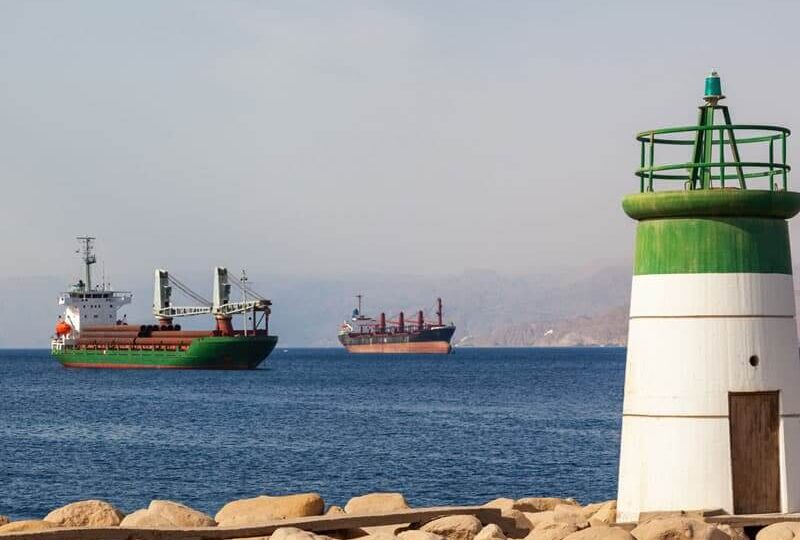
The Red Sea: A Vital Shipping Route Returning To Normalcy
Starting in 2023, Houthi rebels in Yemen began launching multiple attacks on vessels traveling through the Red Sea. This led to global shipping disruptions and a rise in transportation and insurance costs. Many vessels had to reroute via the Cape of Good Hope to avoid the risks.
While the danger of traveling through the Red Sea still remains for cargo ships, attacks have begun to taper off. Here’s what you need to know.
Why Did the Houthis Start Attack Ships In the Red Sea?
In 2023, conflict between Israel and the Gaza Strip broke out. To stand in solidarity with the Palestinians in Gaza, the Houthis started launching missiles and drones at Israel.
They shifted their attacks to Israel-linked cargo ships traveling through the Red Sea after their direct attacks on Israel failed. The Houthis expanded their attacks to vessels linked to other countries they view as supporting Israel, such as the US and UK.
However, numerous vessels with no clear connection to these countries were attacked as well. This includes China, Russia, and even Iran, which is the country that backs the Houthis. The reasons for this was largely due to inaccurate targeting data.
In response to the Houthi’s actions, the US and its Western allies launched Operation Prosperity Guardian to protect vessels traveling through the Red Sea. Much of the operation included escorting vessels through the Red Sea and striking Houthi targets in Yemen.
How Did the Red Sea Crisis Affect Carriers and Global Trade?
Ocean carriers reacted to the Red Sea crisis in a variety of ways.
This includes:
- Suspending/Pausing Operations
- Redirecting Vessels
- Maintaining Limited Operations
- Continuing Normal Operations
Carriers suspended their vessel transits in January 2024 due to their ships coming under attack. Companies in this position had to redirect their vessels via the Cape of Good Hope at the southern tip of Africa.
Certain carriers tightened their security and used the Red Sea in a limited capacity. Other companies from Russia and China continued to use the waterway. Many of them provided armed escorts for their vessels and according to reports, some even gained assurances from the Houthi’s that their vessels wouldn’t be attacked.
The crisis in the Red Sea and the safety measures taken by ocean carriers significantly worsened international shipping and global trade.
Worldwide logistics networks across the world experienced delays. Transportation costs rose for shippers, while insurance expenses on vessels increased for ocean carriers.
What Is the Current State of the Red Sea?
The Red Sea is still a dangerous place to transport freight, but it’s become much safer in recent months. This has largely been due to a tenuous ceasefire between Israel and the Gaza Strip.
Ocean carriers are tentatively resuming their operations in this vital waterway. In June, it was reported that marine traffic had increased by 60%. Despite the improving conditions, shipping volumes in the Red Sea haven’t returned to normal.
There are still many dangers that linger in this body of water. For example, two cargo ships, the M/V Eternity and M/V Magic Seas, were sunk by Houthi rebels in July 2025.
Safe and Secure Shipping R+L Global Logistics
Here at R+L Global Logistics, we provide a variety of transportation services for our customers. Our warehouses can be found in major cities across the US and provide storage for a variety of goods. R+L Global Logistics uses an extensive carrier network. With their support, we can facilitate pick up and delivery of freight anywhere in the country.