
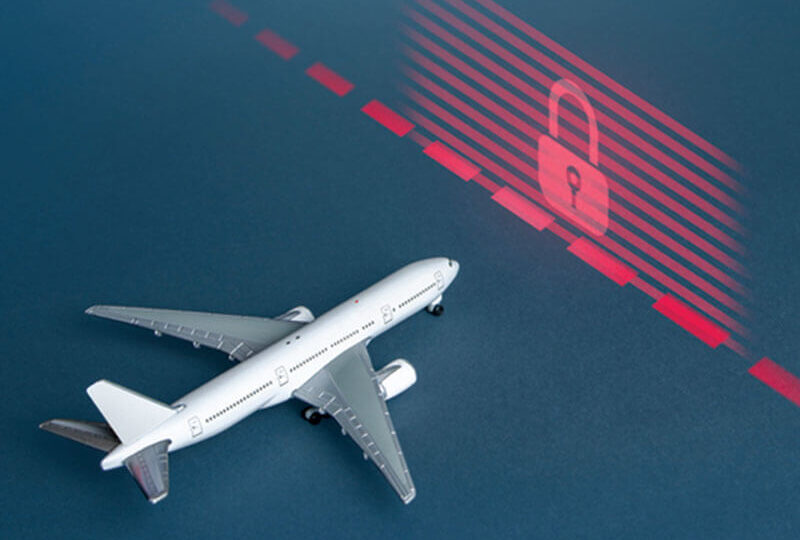
Flight Cuts Strain Air Cargo Shipments
The recent government shutdown resulted in far-reaching repercussions for air travel in the US. To maintain safety standards, the Federal Aviation Administration (FAA) had to cut flights by 10% across 40 major airports. This has led to a strain on air cargo shipments. We’ll discuss how this affects the supply chain and what will happen now that the shutdown is over.
Why Did the Government Shutdown Cause Flight Cuts?
The FAA is a government agency that employs air traffic controllers. Despite the government shutdown, controllers were still required to report for duty.
However, they weren’t getting paid for their work, which led to an increase in air traffic control absences. Controllers that were showing up had to work overtime, which caused exhaustion and burnout.
In response, the FAA had to cut flights to reduce the risk of fatal mistakes at overworked and understaffed airports.
How Has the Supply Chain Been Affected?
The reduction in flights has slowed the supply chain. Businesses are having a harder time shipping high-value and time-sensitive freight because there is less capacity.
Truckload transport and ground networks are absorbing some of the displaced volume caused by the flight cuts. That said, a short-term surge in demand usually leads to spot rate volatility. Equipment will also need to be repositioned to accommodate the increase in shipments.
Even with ground transport picking up the slack, certain products are more likely to be transported by plane.
What Happens Now That the Shutdown is Over?
With the shutdown finally over, flight delays are already falling as operations at airports are returning to normal. Cuts to flights have also been reduced to 6% by the FAA.
Despite the improvements, air freight delays are still expected.
This is largely due to the following factors:
- FAA certification delays
- Food and Drug Administration (FDA) and United States Department of Agriculture (USDA) inspection backlogs
- Grounding of MD-11 and MD-11F aircraft
- Continued air traffic controller shortage
- Displaced aircraft due to rerouting
- Hub bottlenecks
The supply chain will return to normal, but it will take a few weeks for these problems to be resolved.
How R+L Global Logistics Overcomes Supply Chain Uncertainty
Here at R+L Global Logistics, we have the resources to help our customers through any supply chain challenge. Our extensive network of reliable carriers throughout the US that can pick up and deliver freight to any location. They can also provide a variety of transportation services. This includes expedited shipping, hazmat transport, and white glove delivery.
If a customer needs help, we can always find the right solution for their needs.